
Category: Life Philosophy
Blood in the Water - by Greg Walsh
“Blood in the Water”
(If you’ve dipped your toes in the water, and like how it feels) do the favor of allowing yourself to obsess over physical performance for at least one period of your life.
I’m not talking about downing a pre-workout and moving 10% faster in a 10-minute conditioning piece… I’m talking about the non-glamorous details that lead to true advancement and markedly improved performance. Address the areas that hurt the most (pain is part of the process) and indulge the things that drive you nuts (they’re speaking to you for a reason); deep-water, high-level improvement only comes through listening to the voices you don’t want to hear.
Exception to that statement: Those fully-fueled by the act of completion of a physical task (with composition as an afterthought) or largely driven by receipt of a pat-on-the-back for simply managing to finish it; If you’re content with the shallow end, and more motivated by acclaim/ recognition than self-evaluation/ evolution, it’s better to stay out and make way for those with the mettle to jump in deep.
Very similarly to the pursuit of any type of mastery, fixation on performance requires an abandoning of convenience. Nothing about moving past what you are naturally good at, what your body is comfortable with, or what your mind has you convinced is your true potential is easy, but the closer your arm moves to the flame the more you learn about yourself. And, physically or otherwise, the more we know about, trust, and believe in ourselves the greater our chance of achieving excellence in any of our chosen paths.
It all begins with some flavor of obsession.
If our potential and capacity stay trapped in a little box wrapped and bound by convenience, fear, ego, self-deception, or even group-deception, they will forever be the prey, and never the predator. They will be the frightened child, huddled in the dark, wondering what the monster in the closet really looks like.
It doesn’t have to be profoundly unhealthy or permanent, but if we are never imbalanced in favor of tedious details and hard-earned progress, and ferociously driven by strain and struggle (and the satisfaction they bring when pushed to their limits), you will never really know which version of yourself lives at the end of that tunnel- And that is something no strong-minded person should ever die wondering.
- Greg Walsh
Mastery of Skill: Humility and Confidence
Originally posted on EliteFTS.com
Mastery of skills, or practical knowledge, is of critical importance in the self-identity of man and, indeed, is a cornerstone of civilization. The mastery of skills allows us to create, innovate and achieve in our rapidly changing society. The creation of both tools and objects of art is one of the differentiating factors between humans and animals. Sure, there are some animals that create limited tools or works of art, but there is a clear difference in the human scope of creation. For example, in nature, specific ‘tasks’ may be passed down or the ‘art’ that the rare animal may create is biologically driven and usually just a display for the mating process. The art and tools produced by man are far more diverse and complex than anything you will find in the animal kingdom, owing to man’s rational thought and individual choice.
Mastery of a skill first requires both humility and confidence. Confidence certainly fits the generally accepted mold of the alpha male, as it should. Without confidence, we can never start the process of skill mastery and we certainly can’t hope to complete it. The question is, where and how does humility fit into this process? Without both confidence and humility, one’s ability to learn, grow and create will be severely limited. Each of these traits must be carefully balanced to maximize one’s ability to learn and contribute. Confidence will get you moving because you believe in yourself and your capabilities. This starts you on the path to a new skill. But once you jump in, you must temper that confidence and accept being humble in order to learn and master that skill. You can see this not only in the elite level of sports athletes and coaching but in nearly any other field that requires mastery of skill or knowledge. The master level is often confident but at the same time grounded and humble and always learning.
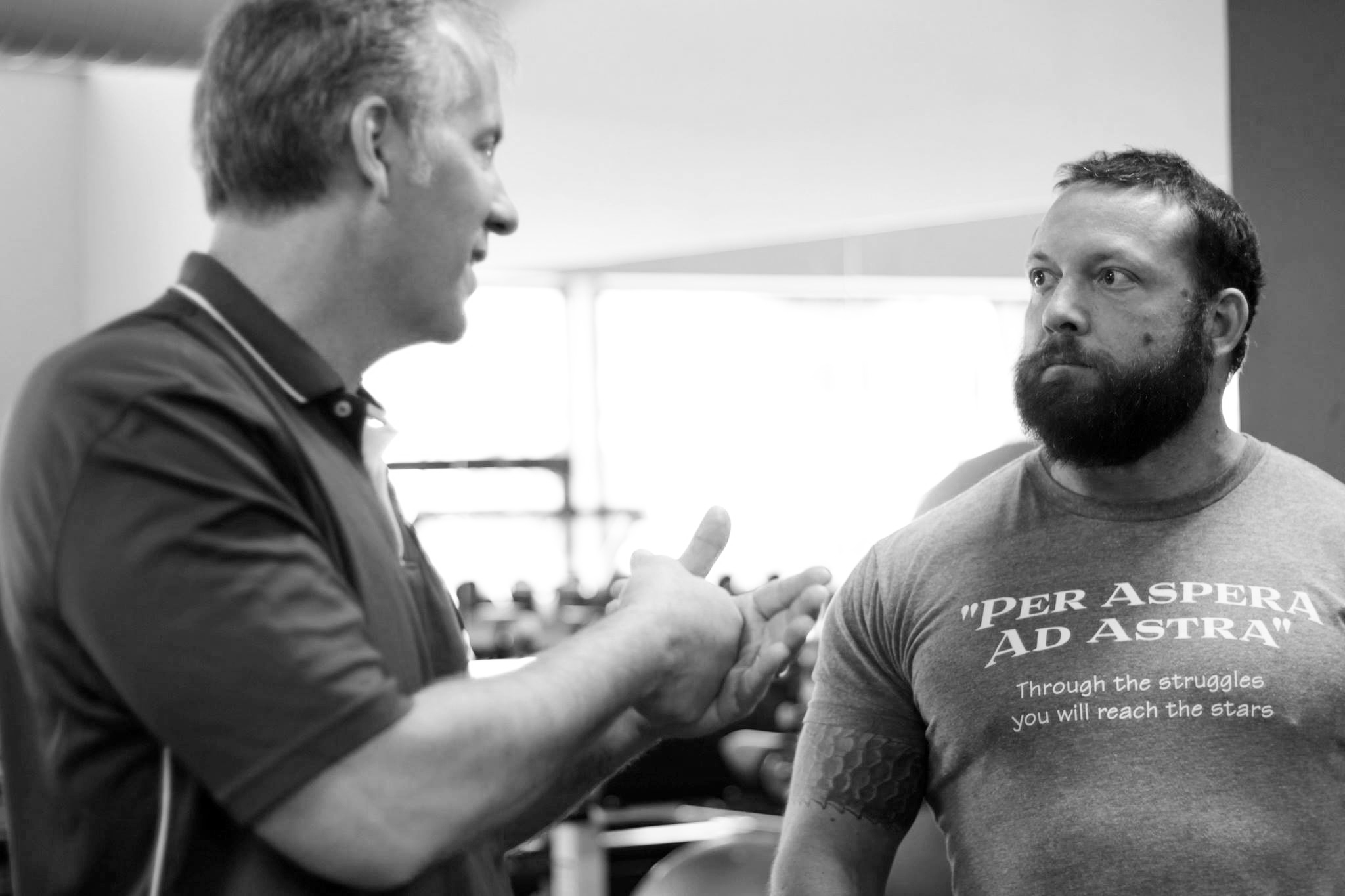
I learned these lessons in the engineering and business worlds. Some of the highest performers or highest contributors I observed weren’t necessarily the smartest people in the room. They were the ones who recognized that not only did they not have all the answers but not any one single person would. They asked the most questions or were successful in engaging all the stakeholders of a process. Their humility in accepting that they didn’t have all the answers combined with their confidence that they could get the desired results led to a high level of contribution.
As a young, highly intelligent individual, I simply wasn’t contributing at that level, as I let my confidence and cockiness in my abilities interfere with the humility I needed to grow. So I began to adopt these methods. I began asking more questions, digging further to understand the systems, asking for input, seeking mentorship and collaborating with all levels of those involved with the process. Realizing how little I knew forced me to take the action needed to exponentially grow my knowledge, understanding and skill and thus increase my results.
RECENT Using Your Body’s Mobility and Stability Mechanisms to Drive Performance
I also began employing these same concepts to my hobbies with similar effects. My skills in the fields of strength training, coaching, human movement, engineering and fabrication began accelerating. The more I sought out mentors and said “I don’t know” or “tell me more,” the more I learned and the more skilled I became.
A couple common phases that articulate this point of humility are “the day you think you know everything is the day you stop learning” and “the more you learn, the more you know that you don’t know.” Everyone has heard these phrases, but practicing and livingthem doesn’t come naturally. It usually only comes with purposeful action. Try spending a little time with most any expert in his or her respective field and you might be surprised by the context of the conversations. Sure, you will find some cocky, self-assured people, but the majority of truly knowledgeable experts are people who will offer a number of answers to the same “big picture” questions in their field. Compare this approach to that shown by relatively low level people in the field. The lower or intermediate level skilled person who wants to “display” mastery will jump at the opportunity to offer singular, definitive answers to those same questions. The inexperienced person is attempting to demonstrate to you, or possibly to himself, that he is competent and a master of his trade. By providing rigid answers without seeking additional input, he has not only proven his inexperience but his fate of never becoming a master.
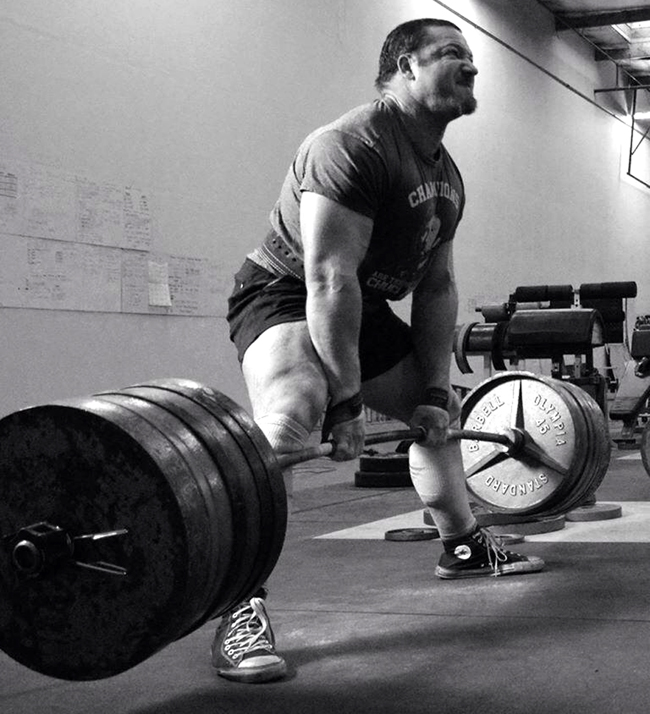
Frequently, we see misdirected confidence and lack of humility in ineffective leaders. Overconfident leaders often have big dreams or ideas, but their projects invariably get derailed by the overlooked details. I imagine these leaders thinking, “I’m a big picture person. I don’t need to know the details.” The key to their failure is that they lack the knowledge to implement the idea and they lack the humility to acquire that knowledge. Some leaders will delegate the forming or implementation of their vision to their subordinates who don’t have the knowledge to analyze the effectiveness or the progress of those details. This results in a plan that can’t achieve the original vision or one that is filled with unintended costs or consequences. Even those ‘big picture’ people must know how to implement their vision. If the success of their ideas depends entirely upon the skill of their subordinates, they are abdicating their position of leadership to become a figurehead and one of no real importance to the creative process.
In order to achieve and acquire new skills, you must be confident in your actions but humble about your understanding. Display the confidence and courage to say “I can and will do this” and the humility to know that there is always a better way. I’ll leave you with Socrates’ old claim, that what he knows most assuredly is that he doesn’t know. Ignorance is also the beginning of wisdom.