
Pictures From My Photo Shoot - Diet Wrap up
(This is a re-post from www.elitefts.com)
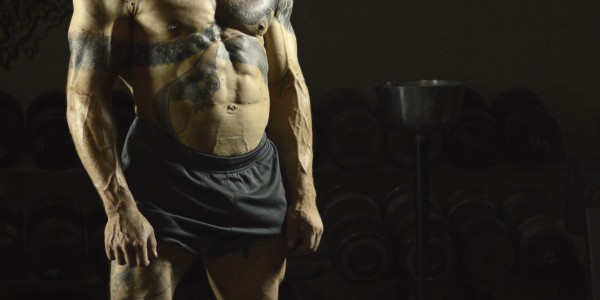
Pictures from my Photo Shoot - Diet Wrap up
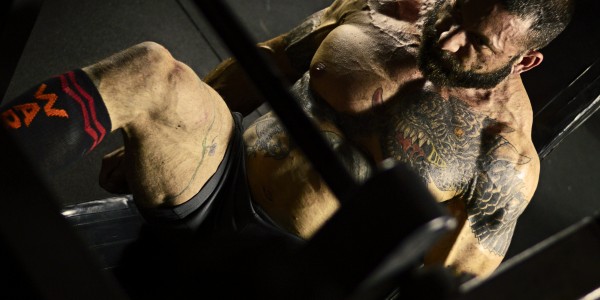
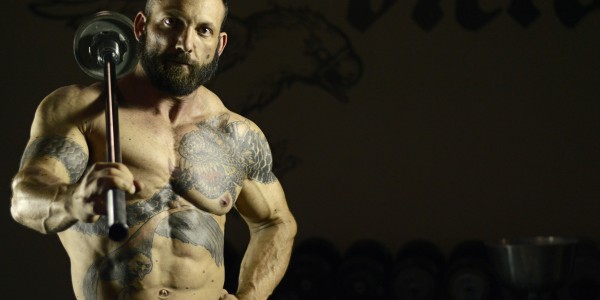
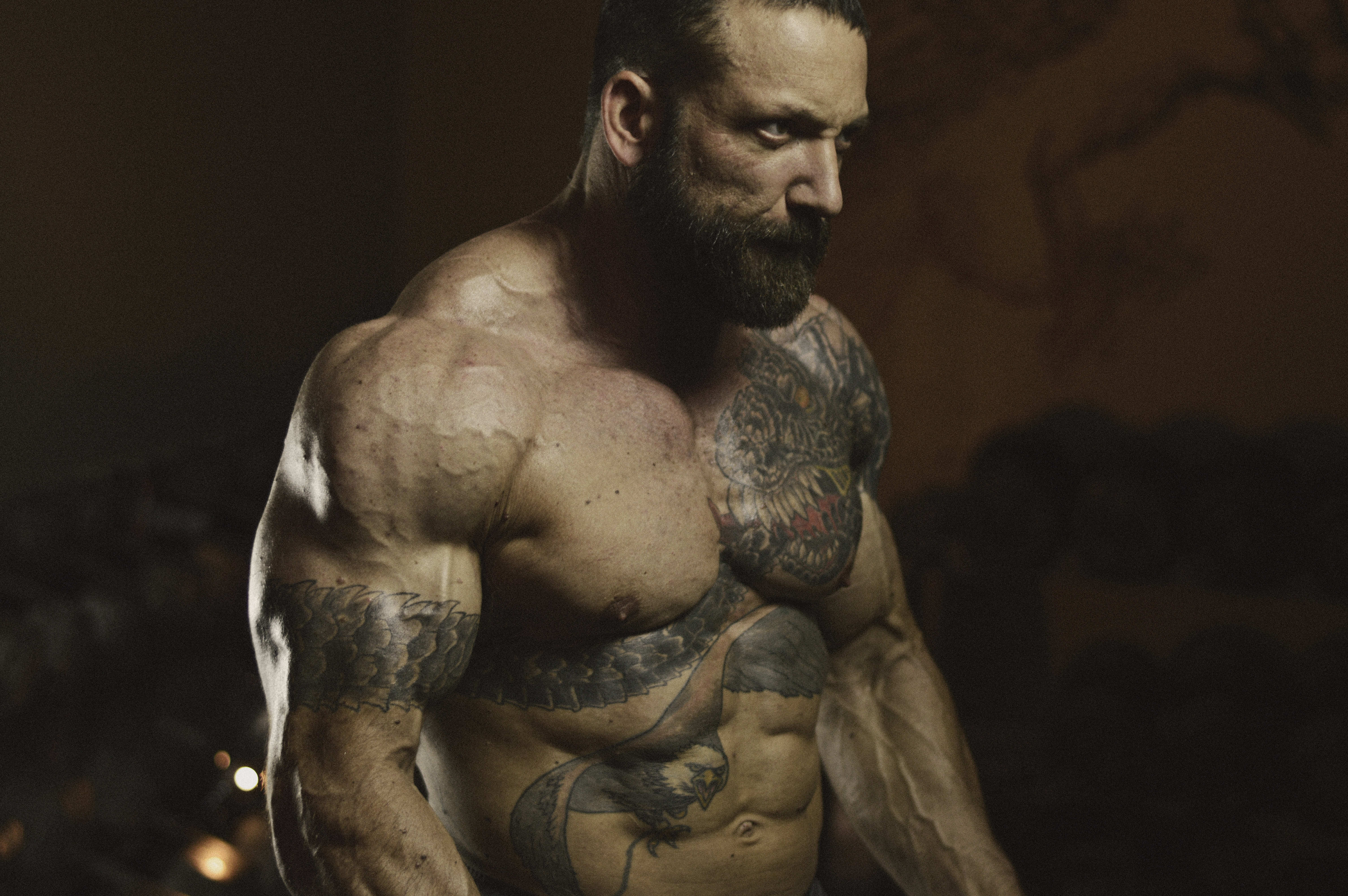
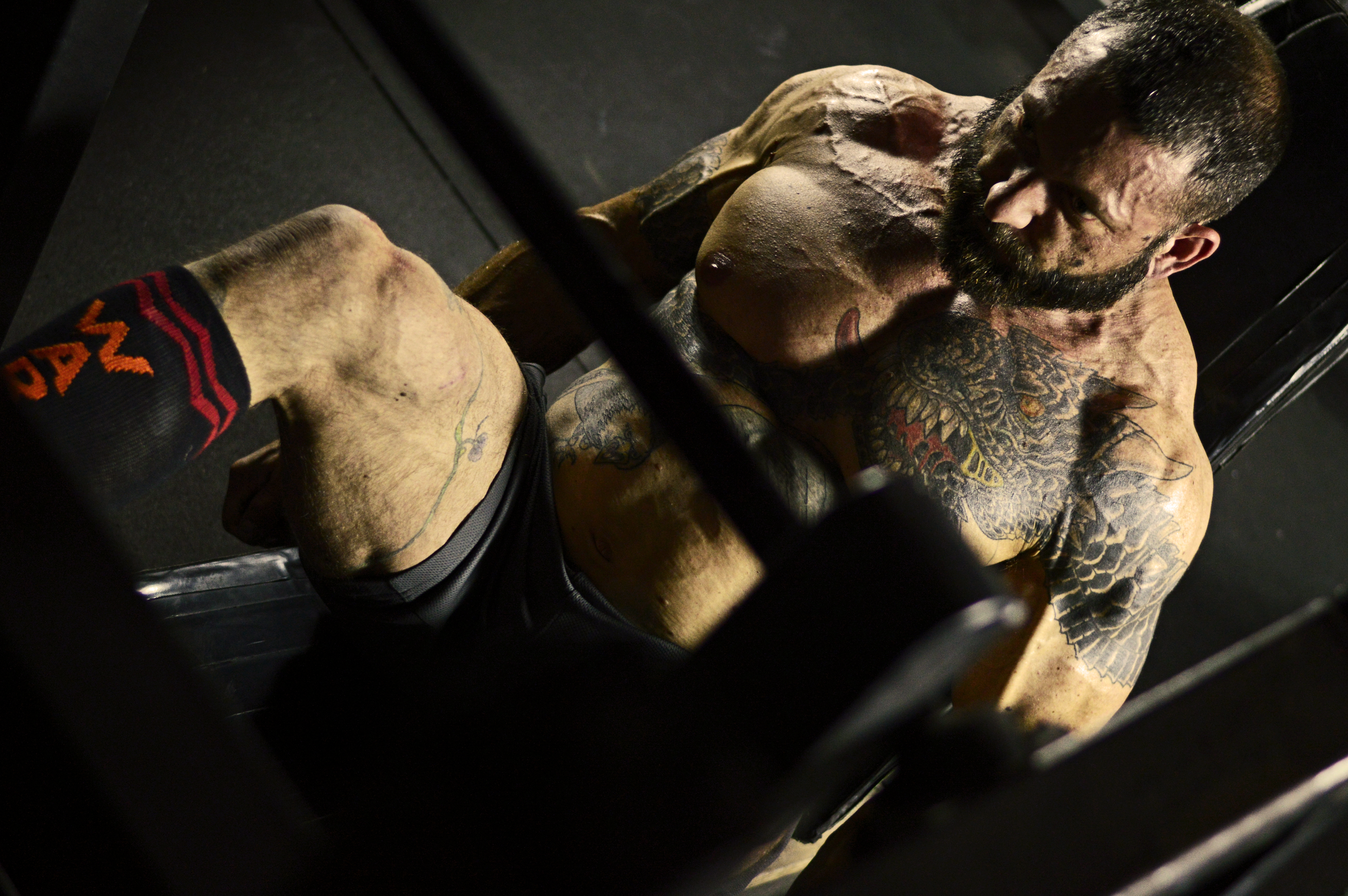
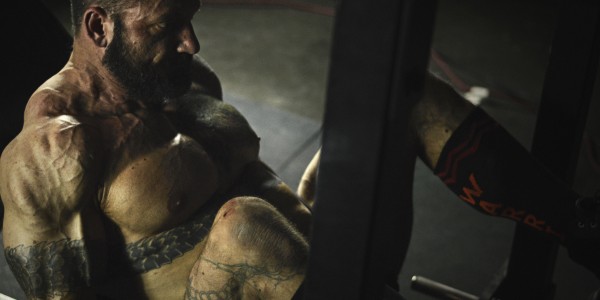
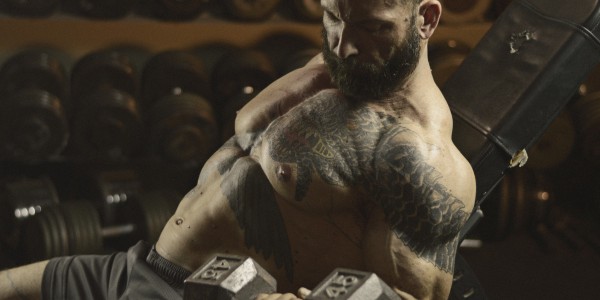
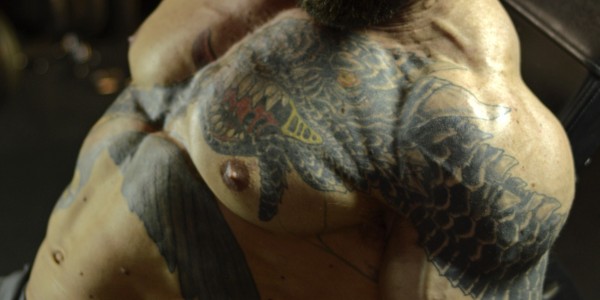
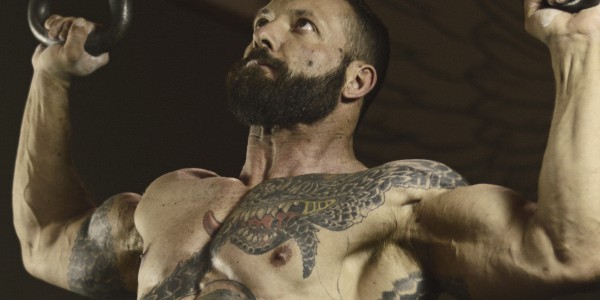
First my apologies for my lack of posting this last few weeks. I have been buried with work and some very frequent training as I entered the final phases of my diet and prep for the photo shoot.
I’ve had a lot of people ask me why I did this. Really it just boiled down to doing something different. With my current schedule training for a competition was out of the picture and I wanted to have a little bit of an understanding of what bodybuilders go through. My friend Amit Sapir managed my diet leading into this.
You will have to click on each image to see the entire photo.
All in all it was a good experience and I plan on rebuilding to a leaner powerlifter allowing me to not have to do the giant weight cuts I’ve done in the past.
Photo’s courtesy of Jack Donovan
Powerlifting Legend Ed Coan and Chris Duffin Talk Shop
This weekend I had the opportunity to spend a couple full days working with Ed Coan. We had a great deal of success in working through some issues he has and establishing a path forward. During the time we also had a lot of back and forth knowledge sharing.
It was a tremendous honor for me to host Ed for the weekend at EPC in Portland and to have his trust for seeking me out. At the end of the period we filmed an incredible interview covering a number of great topics that I think are worth the watch. Make sure to check out the ShouldeRök™ Ed mentioned and subscribe to our newsletter for weekly insights.
The Role Of A Team In Individual Sports
People often under value the role of a team in individual sports. That statement is not an oxymoron as team and individual performance are not diametrically opposed. While it is true that lifting can, and is, done by some individuals entirely by themselves there are substantially more strength athletes who gain from relying on their team.
The role of a team in an individual sports such as powerlifting, olympic lifting and even to some degree bodybuilding is:
- Encouragement – That encouragement or support to dig deeper and push harder
- Reality Checks - Calling out your depth isn’t good or that you didn’t lock that out. Or you just being flat out stupid with your training
- Remove Obstacles – Assisting lifters at meets, reminders to stay hydrated or just keeping the focus on a big training day.
- Physical Support – Spotting, loading, lifting off, or helping with gear
We are social beings and we simply perform better in supportive groups than when we do alone. I am a big proponent of training in teams. Even without a team physically present we can see people using social media to seek out and fill those same team roles noted above.
It’s not just powerlifting or strength training that operates this way. Many ‘individual sports’ you see today require teams to succeed. Look closely and you will see them. MMA, NASCAR, Golf you name it and there will be at least a small team supporting them.
Do you want to realize your peak potential? Then find a group of like-minded individuals that have those needed skills and create a team. This is what we have done at Elite Performance Center building numerous world Champions and All-Time record holders and what you can see with my online team at EliteFTS.
Spotters in my other hobby - saving my ass
Wide Stance Groin Health - Passive Compression | Hip Airplane | Targeted Volume
In December of 2012 I tore my right adductor in a meet. I had actually had some minor tearing early in the year and had been managing it to keep training but with a 782 competition squat it let go on me.
After rehabbing the area I determined a need to reduce my injury risk. With squatting wide and pulling sumo it simply puts a lot of strain on this area that is sometimes slow to recover. It is also a faily common injury point with lifters.
One of the ways I have reduced this risk is with ensuring proper recruitment patterns are firing before this heavy eccentric load. This is done with a specific warmup routine and test-retest methodology before jumping under squats. I reviewed this warmup routine on Breaking Muscle.
That write up only covered that specific warmup and also skipped the hip-airplane that I often employ as part of it.
In this video piece I go into depth on the hip-aiprlane that is used before I squat and pull but also passive compression and some targeted volume work. The passive compression can make an instantaneous improvement if you have some issues in this area and also seems to improve recovery as well as reduce injury risk. I employ passive compression in training on pretty much every heavy set for this reason. A hammy band or a compression band work great. In addition to the passive compression it’s great to work in some volume work to stimulate flushing of this low blood flow area. An example of this is provided in the video as well.
This is not the be all and end all of groin health, but just the methods I have employed with success. It has allowed me to successfully move from that failed squat at the beginning to the standing world record 881 squat 2 years later with no aggravation of this injury.
“The Mad Scientist of Powerlifting”? Stan Efferding w/Chris Duffin
Last weekend I took a trip to Las Vegas and worked with my friend Stan Efferding (Worlds Strongest Bodybuilder) and also Eric Spoto (worlds strongest raw bench presser). I have been working with Eric Spoto on his rotator cuff surgery rehab plan over the last several months. Eric has been working with his physical therapist on his rehab plan while I was guiding him on his training in the gym and other recuperative movements that fell within those parameters. With Eric’s progress he had reached a point that we could begin incorporating the ShouldeRok to deal with some of the root issues that could have led to his surgery to begin with. It was time to build the platform for ongoing strength and shoulder health for his continued dominance in the bench press, prompting this trip.
Upon learning that I was coming down I received a text from Stan asking if I could help him dial in some changes to his deadlift. At least the text was sent to my phone, but I was confused as he was referencing the “mad scientist” for assistance. Upon arriving at the Iron House gym Stan cleared up that he was indeed talking about me, as you will see in the following video. Upon reflection the nickname is fitting given my tendency to tinker with and improve everything including my machining, 4 wheeling rigs, gym devices, and human movement.
Don’t worry the actual coaching videos will follow in coming weeks: “The Mad Scientist of Powerlifting”? Stan Efferding w/Chris Duffin
EliteFTS and the Community We Serve
If you get a chance to checkout the new EliteFTS website do so. I post detailed training log’s with Dave Tate and EliteFTS. The other featured athletes I have the opportunity to share this with are phenomenal, world class and strong. Take a look around, engage EliteFTS and the community we serve. Join in and take part to increase the amount of good information we share (via tweets, reposts, links etc…) to keep our community of athletes growing, mobile, healthy and STRONG!
Don’t forget to checkout our Whiskey & Deadlifts article and t-shirts.
Increase Work Capacity (without Losing Strength)
Originally posted on EliteFTS.com
The following program is built to rapidly grow one’s work capacity while maintaining strength. There will still be gains in strength at this time but the goal is to make substantial gains in work capacity without sacrificing strength, as often happens. It may take a full cycle to ramp up to where you are able to work at full capacity as written in the Week 1-3 phase.
To do this, use smaller loads on the prowler, grappler, swings, or reps on the rope so that you can complete the entire HIIT session. Then over the first three weeks of the cycle, ramp these loads up as your capacity increases. In following cycles your goal is to start at that higher load immediately at week one and maintain through week three. From there, use the same weights/reps/time-on but cycle down as prescribed by dropping circuits or sessions.
[Editor’s Note: The information you see on this piece of paper is straight from the mind of Chris Duffin. Dave gave Chris a call one afternoon and asked that he help contribute to the Make-A-Wish Holiday Manuals. Immediately, and without pause, Chris sat down and recorded the precise methods he has used to help himself and other lifters at Elite Performance Center. There is no second-hand recreation or low-level journalism tactics to make this appealing. It is simply the thoughts of an all-time world record holder.]
Here is some more information about how I usually train. Based on the above workout and the basic tenants of my training methods, you can get a good idea of how you can put these techniques to use.
- The most important thing for any lifter (0:07)
- Duffin’s training protocol (0:25)
- How and why does Duffin measure the speed of trainings lifts? (3:05)
- How does Duffin adjust his training parameters based on the speed of his lifts? (5:06)
- How do Duffin’s training methods change when in preparation for a meet? (6:36)
- What allows Duffin to recover from heavy training more easily than most lifters are able? (8:12)
- How Duffin coaches at Elite Performance Center (9:53)
Week in Training - Diet Getting Close - Hosting APF Meet
As always make sure to check out my friends over at Elite FTS!
MONDAY
Getting kicked around by a nasty virus
Bench Press
135×8
225×5
315×5
405×2
455×1
425×2
315×19
Machine Military Press
Stack x15,12,12
Overhead Tricep Extension
Stack +band x 2 sets
WEDNESDAY
Wasn’t exactly sure what I was going to do but know I need to work back into squatting…. Just scarred to find out how much I’ve lost with my weight loss.
Squat
265×5
375×5
485×3
595×3,3
705×3
1 leg Press w/adductor focus
200×16,16,16
Band Bad Girls
X20,20,20
THURSDAY
Lunch Break Training
Dips x 50
Machine Rows stack x20
Assisted Pullup lockouts x12
Curls 45×12
Machine OH press .75 stack x 25
Shoulderok x20
Repeated 3 times
Deadlift
155×5
265×5
375×3
485×3
595×3
705×6
Machine Rows
Stack x20,20, 16
Rear Delt Flys
55×16,16
Pullups – Neutral Grip
X16,8,8,7
SATURDAY
Ran an APF/AAPF meet with 45 lifters
Rehabilitation - Pec Reattachment Surgery
This post isn’t just about the rehab process. It also gives you a view into the mindset that it takes to never give up and not only overcome a major setup back. And to do so coming back stronger and more motivated than before.
In October of 2010 I tore BOTH the Sternal and Clavicular head of my left pec off their attachment to the humerus. This required surgery and installation of 3 titanium studs followed by rehab. Since that time I have continued to receive multiple emails, Facebook messages, and YouTube questions due to my rapid recovery prompting me to put this piece together. The typical recovery takes 12 months before getting a full release to train heavy, along with the caveat that you will never be 100% again. In the process I’m sharing with you here I had regained mobility within a matter of weeks and had progressed enough that I was training to compete at a powerlifting meet at 6 months. At 9 months I was in competition setting not only a personal record for a total but also landing a Top10 All-Time Powerlifting total. Given the standard rehab process and the experiences of other lifters this was a significant achievement.
The primary content of this article is the video series itself. It is important to note that there is significant risk of re-injury if you pursue these aggressive methods without the proper knowledge or supervision. If you choose to take that risk you can significantly reduce your overall recovery time, yield greater long term recovery, and develop a cascade of other injury due to overcompensation patterns.
With my current knowledge and resources I would take a little bit different approach in regards to the specific details of my recovery. However the overall process would still center on the same core concepts:
Mobility and Range of Motion
- Begin mobilizing the area and work on regaining your range of motion as soon as possible. But stay inside the pain threshold and listen to your body. Every day try to take it a little further. Find a great therapist or other practitioner that can assist you with mobility drills.
Work the Movement Patterns
- Begin utilizing and working the muscle through the movement patterns it is used in. Find a great therapist or other practitioner that can assist you with proper movement patterns.
Recovery Methods
- I spoke extensively about the use of Super Cissus in this video series.
- Also incorporate other recover methods such as foam rolling, trigger point, active release, deep tissue, graston, or stecco fascial to name a few. (I used nearly all of them and then some)
Stay Active
- Train what you can, you will be surprised how even training one side of the body will help you retain your strength and power overall.
- Don’t go INTO pain but play on the edges and continually move that boundary.
Other key points include setting aside the time and potentially money to invest in this being a primary focus. You need to be working on recovery every single day and multiple times a day. You will be pushing the limits of potentially re-injuring the area so you MUST connect with and listen to your body.
Due to the extensive number of video’s I will only embed a few of them. The rest will be linked.
The original injury was done by just being stupid and playing around. After a 2 hour bench press workout I decided I would attempt and iron cross… after never having done one before.
Week 2 http://www.youtube.com/watch?v=G9bOlcROYx8
Week 3 http://www.youtube.com/watch?v=6r_jdiAG1ho
Week 4 http://www.youtube.com/watch?v=GEu4YRU2_8s
Week 5&6 http://www.youtube.com/watch?v=wrRrkg7ZklI
Week 20 http://www.youtube.com/watch?v=jl3uEoKfyOk
Week 26 http://www.youtube.com/watch?v=fQN986InL4Y
Week 26 Bench pressing with Slingshot http://www.youtube.com/watch?v=ZBw1bfG4mco
Here are some excerpts of how I trained just one side of body or didn’t let my arm being in a sling hold me back. Mind you these methods are bordering on the side of ‘stupid’ in on some occasions… but it does dive home the point of don’t let anything stand in your way. I was squatting and doing 1-arm deadlifts just days/weeks after surgery
500×6 No arm squat
One arm deadlifts in a sling
Tire flips only weeks out
And finally my meet at 9 months post surgery. That 1008lb squat took a significant toll on my pec otherwise I believe I would have benched in the low to mid 700’s at this meet.
Don’t every give in and thing your done. Giving up just means your taking the easy path out. Use your obstacle to overcome as motivation to dig even deeper.